
How to work in the space industry
The UK space industry builds satellites, launch systems and the software that runs them. Many people get in through aerospace, engineering or software apprenticeships, then move into space companies as technicians.
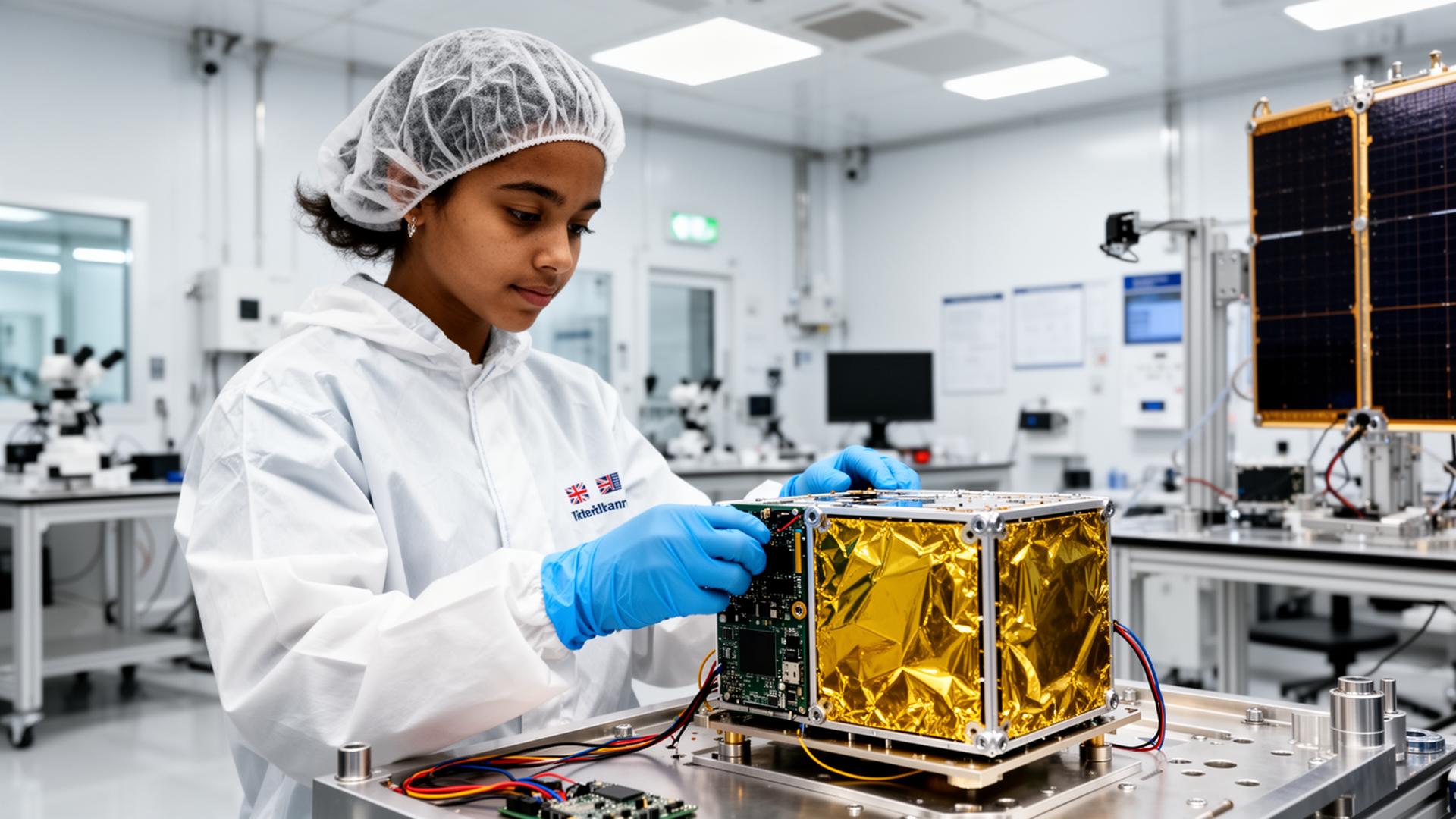
How can I work in the UK space industry without a degree?
Many people enter the UK space industry through aerospace, electronics, engineering or software apprenticeships, then move into satellite assembly, testing or data roles. Maths and physics are the most useful subjects. The National Careers Service lists aerospace engineering technician pay of about £27,000 rising to £50,000.
Last reviewed by the Shine careers team.
What does a space industry technician do?
- Assemble and test satellite parts in a cleanroom
- Follow precise build and inspection procedures
- Use test equipment to check electronics and structures
- Support engineers, mission control and software teams
Pay
Typical salary: £27,000 as a starter, rising to £50,000 with experience.
Apprentices under 19, or in their first year, earn at least £8.00 an hour from April 2026. Many employers pay more.
Sources: National Careers Service (aerospace engineering technician), gov.uk minimum wage rates. See also how much apprentices are paid.
What you need to get in
- Usually GCSEs at grade 4 or above in maths, English and science
- A levels, a T Level or a Level 3 engineering course for higher apprenticeships
- Very careful, precise work habits
Routes in
Aerospace or engineering technician apprenticeship
Level 3 to 4 apprenticeships with aerospace and satellite manufacturers.
Degree apprenticeship
Aerospace, systems or electronic engineering degree apprenticeships lead to engineer roles.
Software and data apprenticeships
Space firms need developers and data analysts to process satellite data.
T Level in Engineering, Manufacturing, Processing and Control
Two years of study with an industry placement.
How to become a space industry technician, step by step
- 1
Focus on maths and physics
These open the most doors in space and aerospace.
- 2
Build something
Electronics kits, coding projects or rocketry clubs give you something to talk about.
- 3
Search wider than 'space'
Look for aerospace, electronics, manufacturing and software apprenticeships; many feed into space work.
- 4
Follow UK space clusters
Space companies group around places like Harwell, Glasgow, Leicester, Stevenage and Cornwall.
- 5
Apply and specialise
Once in, you can move into satellite assembly, testing, operations or data.
Skills employers look for
- Precision
- Maths and physics
- Following procedures
- Teamwork
Not sure you have them yet? Read our guide to transferable skills, or prepare for an interview.
Related guides
FAQs
- Can I work in the space industry without a degree?
- Yes. Technician and apprenticeship routes in aerospace, electronics, manufacturing and software all lead into space companies.
- Are there space apprenticeships in the UK?
- Yes. Satellite and aerospace manufacturers offer technician and degree apprenticeships, though they are often advertised as aerospace or engineering apprenticeships.
- How much does a space technician earn?
- The National Careers Service lists about £27,000 rising to £50,000 for aerospace engineering technicians, the closest standard profile.
- What subjects do I need?
- Maths and physics are the most useful, plus English. Computing helps for software and data roles.
- Where are UK space jobs?
- Around Harwell in Oxfordshire, Glasgow, Leicester, Stevenage, Guildford and Cornwall, among others.
Last reviewed 23 September 2026 by the Shine careers team.
Related guides
Part of Shine's apprenticeship guide series, plain-English answers, updated regularly.
- Apprenticeships in the UKWhat is an apprenticeship and how do you get one?
- Engineering apprenticeshipsWhat is an engineering apprenticeship?
- Construction apprenticeshipsWhat is a construction apprenticeship?
- STEM apprenticeshipsWhat is a STEM apprenticeship?
- IT & digital apprenticeshipsWhat is an IT apprenticeship?
- Manufacturing apprenticeshipsWhat is a manufacturing apprenticeship?
- Agriculture apprenticeshipsWhat is an agriculture apprenticeship?
- Degree apprenticeshipsWhat is a degree apprenticeship?
- London apprenticeshipsHow do you find an apprenticeship in London?
- Apprenticeships vs UCASCan you apply for apprenticeships through UCAS?
- School leaver jobsWhat jobs can you get after leaving school?
- Jobs for 16 & 17 year oldsWhat jobs can you get at 16 or 17 in the UK?
- Weekend jobs at 16What weekend jobs can you get at 16?
- Summer jobs for teenagersHow do you get a summer job at 16 or 17?
- Jobs for 16 year oldsWhat jobs can you get at 16 in the UK?
- Jobs for 17 year oldsWhat jobs can you get at 17 in the UK?
- First CV with no experienceHow do you write a CV at 16 or 17 with no work experience?
- Jobs with no experienceHow do you get a job with no experience at 16–24?
- Routes into medicineHow do you get into medicine in the UK?
- Routes into scienceHow do you get into a science career without a degree?
- T Levels explainedWhat is a T Level and what is it worth?
- Transferable skillsWhat are transferable skills and how do you build them?
- UK youth work & pay factsWhat is the minimum wage and how many hours can you work at 16 or 17 in the UK?
- T Levels vs apprenticeships vs A levelsShould you do a T Level, an apprenticeship or A levels?
- Apprenticeship vs universityIs an apprenticeship better than university?
- What to do after GCSEs or A levelsWhat are your options after GCSEs or A levels?
- Well-paid jobs without a degreeWhat are the best-paid UK jobs you can get without a degree?
- Free online coursesWhat free online courses can a 16 to 24 year old do in the UK?
- Volunteering for teenagersHow do you find volunteering as a teenager in the UK?
- Changing direction at 18 to 24How do you change career direction at 18 to 24 in the UK?
- UK entry-level jobs by cityWhat entry-level jobs in the UK hire teenagers with no experience?
- Jobs for 18 year oldsWhat jobs can you get at 18 in the UK?
- Retraining without full-time studyHow do you retrain without going back to full-time study?
- What job should I do?How do you decide what job you should do?
- How to prepare for an interviewHow do you prepare for a first job or apprenticeship interview?
- How to become an electricianHow do I become an electrician in the UK?
- How to become a healthcare support workerHow do I become a healthcare support worker?
- How to become a software developerHow do I become a software developer without a degree?
- How to become a mechanicHow do I become a mechanic in the UK?
- How to become a lab technicianHow do I become a lab technician?
- How to become a farmerHow do I become a farmer if my family doesn't farm?
- How to become a marine engineerHow do I become a marine engineer?
- How to become a site engineerHow do I become a site engineer without a degree?