
How to become a farmer
You do not need to grow up on a farm. Most new farmers start with an agriculture apprenticeship, the Agriculture T Level or a land-based college course, then work up to herd, farm or estate manager.
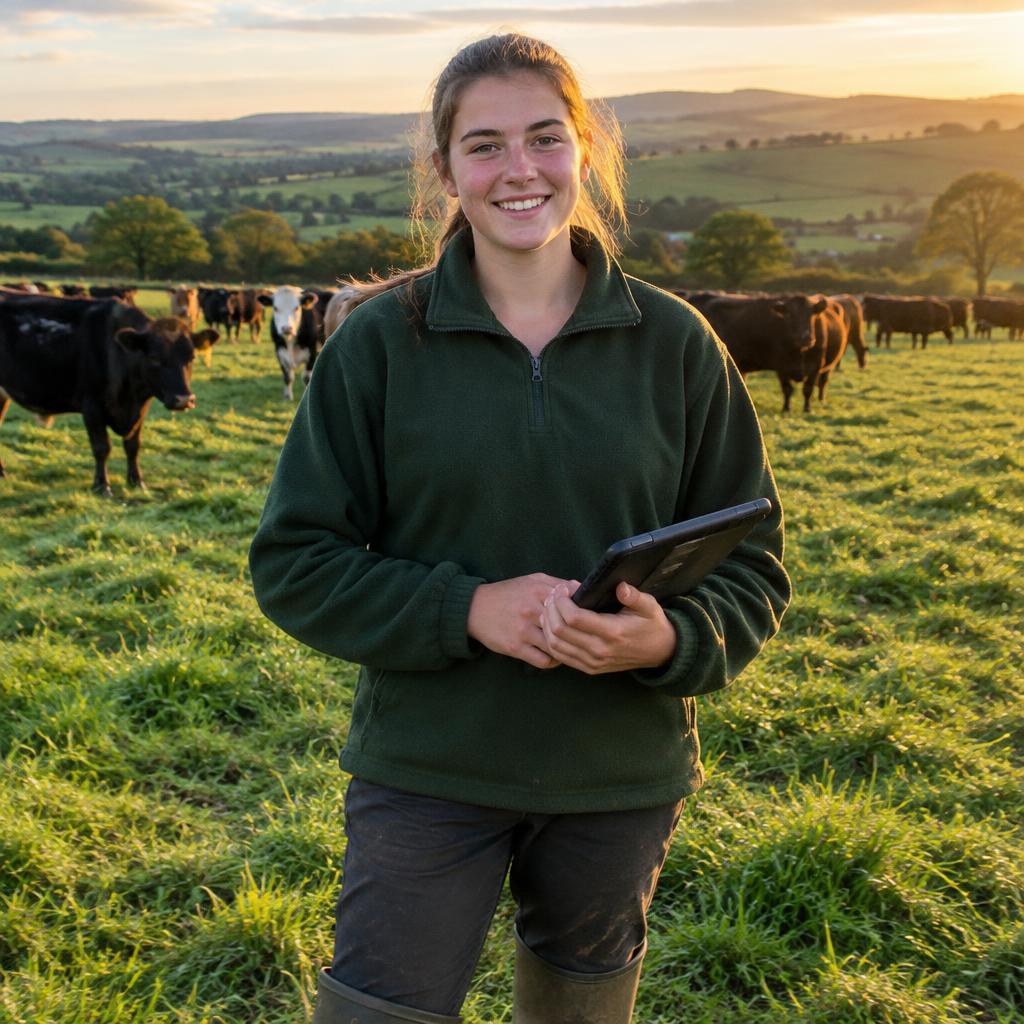
How do I become a farmer if my family doesn't farm?
Start with an agriculture apprenticeship, the Agriculture, Land Management and Production T Level or a land-based college course, then build experience in livestock, crops or agri-tech. Seasonal lambing or harvest work is a practical first step. The National Careers Service lists pay of about £24,000 rising to £50,000.
Last reviewed by the Shine careers team.
What does a farmer do?
- Look after livestock or crops through the seasons
- Drive and maintain tractors and machinery
- Use data, GPS and sensors to plan planting and feeding
- Keep records for welfare, safety and subsidies
Pay
Typical salary: £24,000 as a starter, rising to £50,000 with experience.
Apprentices under 19, or in their first year, earn at least £8.00 an hour from April 2026. Many employers pay more.
Sources: National Careers Service, gov.uk minimum wage rates. See also how much apprentices are paid.
What you need to get in
- Level 2 apprenticeships often have no formal GCSE requirement
- Level 3 and above usually ask for GCSE maths and English at grade 4
- Comfort working outdoors in all weather, and early starts
Routes in
Agriculture apprenticeship
General farm worker (Level 2), livestock or crop technician (Level 3), up to degree level.
T Level in Agriculture, Land Management and Production
Two years of study with a long farm placement.
Land-based college
Colleges such as Harper Adams, Reaseheath, Askham Bryan and SRUC run agriculture courses.
Seasonal farm work
Lambing, harvest or dairy relief work is a practical first step.
How to become a farmer, step by step
- 1
Try it first
Seasonal work, a Young Farmers' club or volunteering on a city farm shows you what the job is like.
- 2
Pick your area
Dairy, sheep and beef, arable, horticulture or agri-tech.
- 3
Find an apprenticeship or course
Search Shine, Find an apprenticeship and local land-based college vacancy boards.
- 4
Get your tickets
Tractor driving, ATV and pesticide certificates make you more employable.
- 5
Work towards management
Experienced workers move into herd, farm or estate management, or start their own business through tenancy schemes.
Skills employers look for
- Reliability
- Working with animals or machinery
- Planning ahead
- Physical stamina
Not sure you have them yet? Read our guide to transferable skills, or prepare for an interview.
Related guides
FAQs
- Can you become a farmer without a family farm?
- Yes. Many people start as farm workers or apprentices and later rent land through county council farms or tenancy schemes, or manage farms for others.
- How much does a farmer earn?
- The National Careers Service lists about £24,000 for starters rising to £50,000 with experience.
- Is there an agriculture T Level?
- Yes. The Agriculture, Land Management and Production T Level runs for two years with a long placement on a farm or estate.
- Do I need a degree to be a farmer?
- No. Apprenticeships and college courses are common routes. Degrees help for management and agri-science roles.
- Do farm apprenticeships include accommodation?
- Some do, especially on dairy and estate farms. It is never guaranteed, so check the advert.
Last reviewed 23 September 2026 by the Shine careers team.
Related guides
Part of Shine's apprenticeship guide series, plain-English answers, updated regularly.
- Apprenticeships in the UKWhat is an apprenticeship and how do you get one?
- Engineering apprenticeshipsWhat is an engineering apprenticeship?
- Construction apprenticeshipsWhat is a construction apprenticeship?
- STEM apprenticeshipsWhat is a STEM apprenticeship?
- IT & digital apprenticeshipsWhat is an IT apprenticeship?
- Manufacturing apprenticeshipsWhat is a manufacturing apprenticeship?
- Agriculture apprenticeshipsWhat is an agriculture apprenticeship?
- Degree apprenticeshipsWhat is a degree apprenticeship?
- London apprenticeshipsHow do you find an apprenticeship in London?
- Apprenticeships vs UCASCan you apply for apprenticeships through UCAS?
- School leaver jobsWhat jobs can you get after leaving school?
- Jobs for 16 & 17 year oldsWhat jobs can you get at 16 or 17 in the UK?
- Weekend jobs at 16What weekend jobs can you get at 16?
- Summer jobs for teenagersHow do you get a summer job at 16 or 17?
- Jobs for 16 year oldsWhat jobs can you get at 16 in the UK?
- Jobs for 17 year oldsWhat jobs can you get at 17 in the UK?
- First CV with no experienceHow do you write a CV at 16 or 17 with no work experience?
- Jobs with no experienceHow do you get a job with no experience at 16–24?
- Routes into medicineHow do you get into medicine in the UK?
- Routes into scienceHow do you get into a science career without a degree?
- T Levels explainedWhat is a T Level and what is it worth?
- Transferable skillsWhat are transferable skills and how do you build them?
- UK youth work & pay factsWhat is the minimum wage and how many hours can you work at 16 or 17 in the UK?
- T Levels vs apprenticeships vs A levelsShould you do a T Level, an apprenticeship or A levels?
- Apprenticeship vs universityIs an apprenticeship better than university?
- What to do after GCSEs or A levelsWhat are your options after GCSEs or A levels?
- Well-paid jobs without a degreeWhat are the best-paid UK jobs you can get without a degree?
- Free online coursesWhat free online courses can a 16 to 24 year old do in the UK?
- Volunteering for teenagersHow do you find volunteering as a teenager in the UK?
- Changing direction at 18 to 24How do you change career direction at 18 to 24 in the UK?
- UK entry-level jobs by cityWhat entry-level jobs in the UK hire teenagers with no experience?
- Jobs for 18 year oldsWhat jobs can you get at 18 in the UK?
- Retraining without full-time studyHow do you retrain without going back to full-time study?
- What job should I do?How do you decide what job you should do?
- How to prepare for an interviewHow do you prepare for a first job or apprenticeship interview?
- How to become an electricianHow do I become an electrician in the UK?
- How to become a healthcare support workerHow do I become a healthcare support worker?
- How to become a software developerHow do I become a software developer without a degree?
- How to become a mechanicHow do I become a mechanic in the UK?
- How to become a lab technicianHow do I become a lab technician?
- How to become a marine engineerHow do I become a marine engineer?
- How to work in the space industryHow can I work in the UK space industry without a degree?
- How to become a site engineerHow do I become a site engineer without a degree?