
How to become an electrician
The most common way in is a Level 3 electrician apprenticeship: you are paid to work alongside qualified electricians while training at college, and finish fully qualified in around four years.
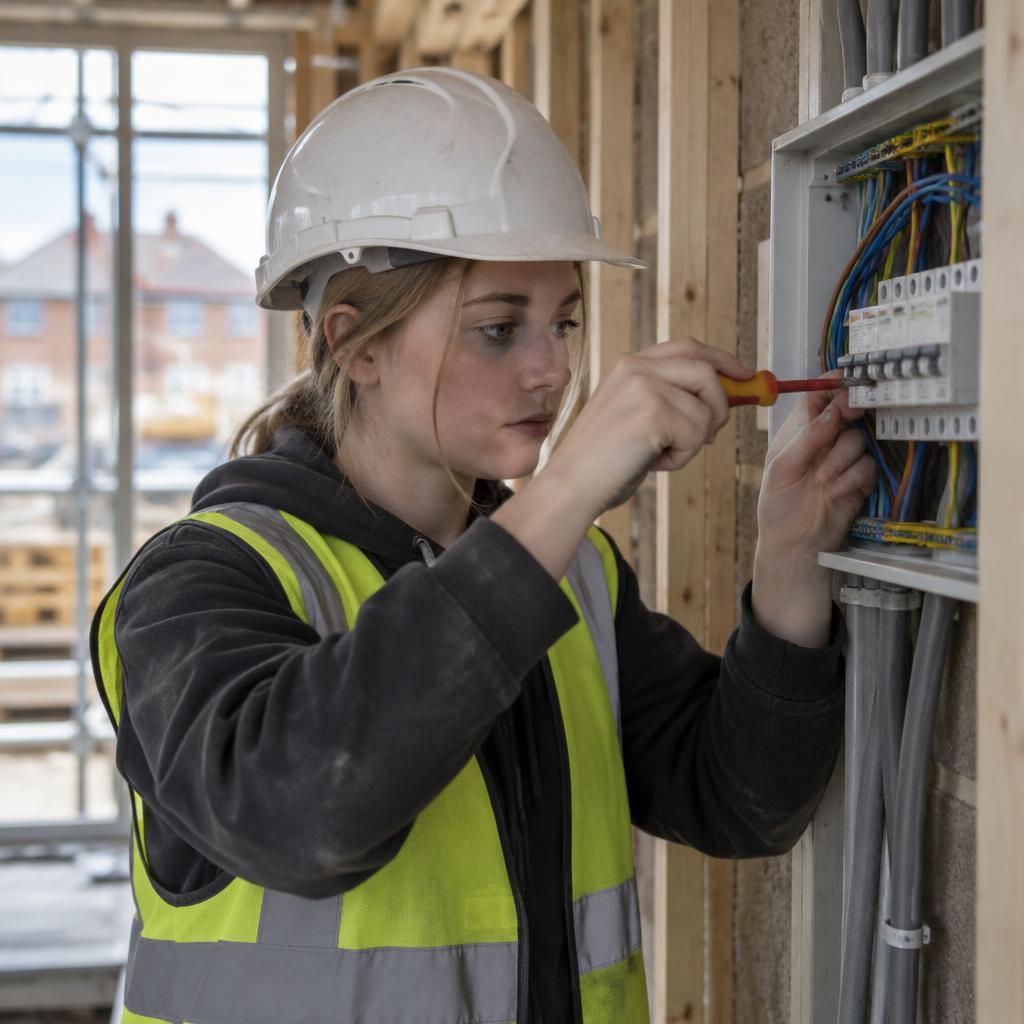
How do I become an electrician in the UK?
Most UK electricians qualify through a Level 3 installation electrician apprenticeship lasting around four years, ending with the AM2 practical assessment and an ECS gold card. Employers usually ask for GCSE maths and English at grade 4. The National Careers Service lists pay of about £26,000 rising to £45,000.
Last reviewed by the Shine careers team.
What does a electrician do?
- Install wiring, sockets, lighting and consumer units in homes, shops and new builds
- Test circuits and certify that installations are safe
- Find and fix faults, often on call-outs
- Read drawings and follow the wiring regulations (BS 7671)
Pay
Typical salary: £26,000 as a starter, rising to £45,000 with experience.
Apprentices under 19, or in their first year, earn at least £8.00 an hour from April 2026. Many employers pay more.
Sources: National Careers Service, gov.uk minimum wage rates. See also how much apprentices are paid.
What you need to get in
- Usually GCSEs at grade 4 or above in maths and English (some employers accept grade 3 and support you to resit)
- Colour vision good enough to tell wires apart
- No previous experience needed for an apprenticeship
Routes in
Level 3 installation electrician apprenticeship
The main route. Around four years, ending with the AM2 practical assessment, which leads to your ECS gold card.
College course first
A Level 2 or 3 electrical installation diploma at college, then an apprenticeship or trainee job to complete your practical experience.
T Level in Building Services Engineering
Two years of study with an industry placement, a good bridge into an electrical apprenticeship.
Electrical labourer or mate
Start as a labourer on site, learn the job, then move onto an apprenticeship with the same firm.
How to become a electrician, step by step
- 1
Check your GCSEs
Aim for grade 4 in maths and English. If you are short, many colleges let you resit alongside training.
- 2
Search for apprenticeships
Look on Shine's board and the government Find an apprenticeship service. Local electrical contractors and housing associations recruit every spring and summer.
- 3
Get some hands-on experience
Work experience, a weekend job with a trades firm or a short electrical taster course shows you mean it.
- 4
Apply and prepare for the aptitude test
Many large employers use a maths and problem-solving test. Practise fractions, percentages and simple algebra.
- 5
Qualify with the AM2
Finish your apprenticeship, pass the AM2 assessment and apply for your ECS gold card as a qualified electrician.
Skills employers look for
- Maths and problem-solving
- Attention to detail and safety
- Working with your hands
- Talking to customers
Not sure you have them yet? Read our guide to transferable skills, or prepare for an interview.
Related guides
FAQs
- How long does an electrician apprenticeship take?
- A Level 3 installation electrician apprenticeship usually takes around four years, including the AM2 practical assessment at the end.
- How much does an apprentice electrician earn?
- Apprentices under 19, or in their first year, are paid at least the apprentice minimum wage of £8.00 an hour from April 2026 (gov.uk). Many employers pay more. Qualified electricians earn about £26,000 rising to £45,000 with experience, according to the National Careers Service.
- Can I become an electrician at 16?
- Yes. You can start an electrician apprenticeship from 16 once you have left school. Most employers ask for GCSE maths and English at grade 4.
- Can I become an electrician without an apprenticeship?
- You can study an electrical diploma at college, but to be fully qualified you still need on-site experience and the AM2 assessment, which most people get through an apprenticeship or trainee job.
- What is the AM2?
- The AM2 is the practical assessment that proves you can install, test and fault-find safely. Passing it is what lets you apply for the ECS gold card as a qualified electrician.
Last reviewed 23 September 2026 by the Shine careers team.
Related guides
Part of Shine's apprenticeship guide series, plain-English answers, updated regularly.
- Apprenticeships in the UKWhat is an apprenticeship and how do you get one?
- Engineering apprenticeshipsWhat is an engineering apprenticeship?
- Construction apprenticeshipsWhat is a construction apprenticeship?
- STEM apprenticeshipsWhat is a STEM apprenticeship?
- IT & digital apprenticeshipsWhat is an IT apprenticeship?
- Manufacturing apprenticeshipsWhat is a manufacturing apprenticeship?
- Agriculture apprenticeshipsWhat is an agriculture apprenticeship?
- Degree apprenticeshipsWhat is a degree apprenticeship?
- London apprenticeshipsHow do you find an apprenticeship in London?
- Apprenticeships vs UCASCan you apply for apprenticeships through UCAS?
- School leaver jobsWhat jobs can you get after leaving school?
- Jobs for 16 & 17 year oldsWhat jobs can you get at 16 or 17 in the UK?
- Weekend jobs at 16What weekend jobs can you get at 16?
- Summer jobs for teenagersHow do you get a summer job at 16 or 17?
- Jobs for 16 year oldsWhat jobs can you get at 16 in the UK?
- Jobs for 17 year oldsWhat jobs can you get at 17 in the UK?
- First CV with no experienceHow do you write a CV at 16 or 17 with no work experience?
- Jobs with no experienceHow do you get a job with no experience at 16–24?
- Routes into medicineHow do you get into medicine in the UK?
- Routes into scienceHow do you get into a science career without a degree?
- T Levels explainedWhat is a T Level and what is it worth?
- Transferable skillsWhat are transferable skills and how do you build them?
- UK youth work & pay factsWhat is the minimum wage and how many hours can you work at 16 or 17 in the UK?
- T Levels vs apprenticeships vs A levelsShould you do a T Level, an apprenticeship or A levels?
- Apprenticeship vs universityIs an apprenticeship better than university?
- What to do after GCSEs or A levelsWhat are your options after GCSEs or A levels?
- Well-paid jobs without a degreeWhat are the best-paid UK jobs you can get without a degree?
- Free online coursesWhat free online courses can a 16 to 24 year old do in the UK?
- Volunteering for teenagersHow do you find volunteering as a teenager in the UK?
- Changing direction at 18 to 24How do you change career direction at 18 to 24 in the UK?
- UK entry-level jobs by cityWhat entry-level jobs in the UK hire teenagers with no experience?
- Jobs for 18 year oldsWhat jobs can you get at 18 in the UK?
- Retraining without full-time studyHow do you retrain without going back to full-time study?
- What job should I do?How do you decide what job you should do?
- How to prepare for an interviewHow do you prepare for a first job or apprenticeship interview?
- How to become a healthcare support workerHow do I become a healthcare support worker?
- How to become a software developerHow do I become a software developer without a degree?
- How to become a mechanicHow do I become a mechanic in the UK?
- How to become a lab technicianHow do I become a lab technician?
- How to become a farmerHow do I become a farmer if my family doesn't farm?
- How to become a marine engineerHow do I become a marine engineer?
- How to work in the space industryHow can I work in the UK space industry without a degree?
- How to become a site engineerHow do I become a site engineer without a degree?