
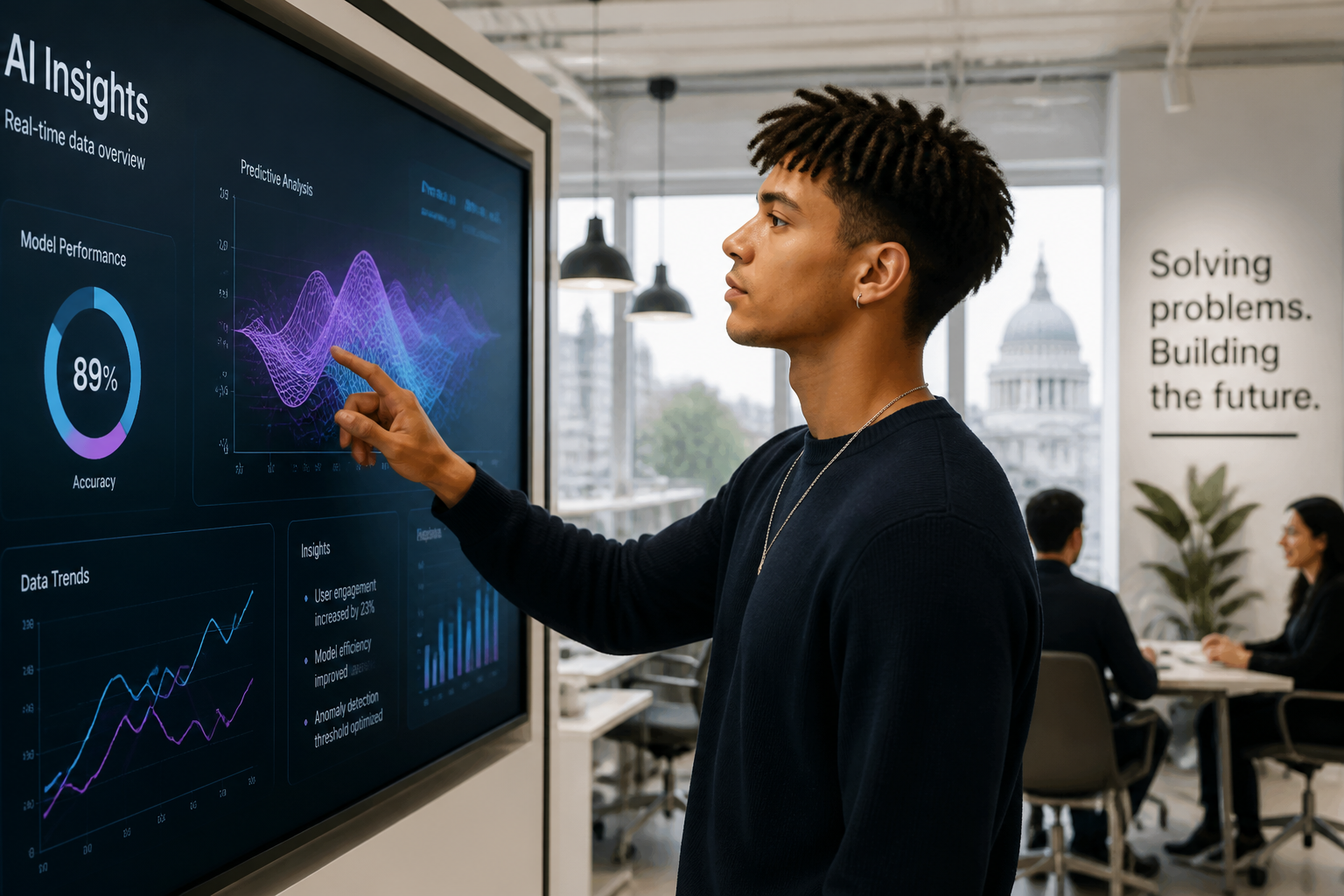
As we look toward the 2026 intake, the landscape of entry-level hiring has shifted fundamentally. We are no longer simply recruiting 'digital natives'; we are welcoming the first generation of 'AI-native' professionals. For these graduates and apprentices, Generative AI isn't a futuristic novelty—it is a baseline expectation.
However, for UK employers, this presents a unique challenge. While Gen Z and AI in the workplace are naturally compatible, the risk lies in over-automation. If a junior employee uses AI to handle every foundational task, how do they learn the critical thinking required to eventually lead? The goal for 2026 onboarding isn't just teaching talent how to use tools, but how to maintain their human edge alongside them.
Redefining 'The Basics' in an Automated Workflow
Historically, entry-level roles involved 'grunt work'—data entry, drafting basic reports, or scheduling. These tasks, while tedious, were the training grounds where juniors learned the vocabulary and mechanics of their industry. With AI now capable of handling these tasks in seconds, the 2026 onboarding process must pivot.
Instead of traditional task-based training, focus on AI-augmented workflows. Train your cohort to view AI as a 'co-pilot' rather than an 'autopilot.' Onboarding should include modules on prompt engineering specific to your sector, but more importantly, it must teach output verification. The new 'basic' skill is the ability to spot an AI hallucination or a biased data set. By teaching juniors to be the 'Editor-in-Chief' of AI-generated work, you build the discernment skills that automation cannot replicate.
Prioritising 'Human-Only' Skills
As technical barriers lower due to automation, soft skills—or 'durable skills'—become the primary value drivers for your new starters. Your 2026 onboarding programme should lean heavily into the areas where AI struggles: empathy, complex negotiation, and cultural nuance.
Gen Z candidates often report anxiety regarding workplace interpersonal dynamics, partly due to the rise of remote education and work. Use your onboarding period to facilitate face-to-face (or high-touch virtual) collaboration. Mentorship remains the most effective tool here. Pair your 2026 cohort with senior leaders not just for career advice, but to observe high-stakes decision-making. Show them the 'why' behind a strategy, something an LLM can only guess at based on probability.
The Ethics of Transparency
Gen Z is a values-driven generation. They are acutely aware of the ethical implications of AI, from environmental impact to job displacement. To build trust from day one, your onboarding must include a clear 'AI Manifesto.'
Employers should be transparent about how the company uses data and what the boundaries are for AI usage. If a junior uses AI to draft a client email, is that encouraged or frowned upon? Setting these guardrails early prevents 'shadow AI' usage and ensures your new talent feels secure in their roles. Reassure them that AI is there to enhance their career trajectory, not to replace the need for their unique perspective.
Continuous Learning as a Standard Operating Procedure
The half-life of technical skills is shrinking. A tool that is industry-standard during your 2026 spring intake might be obsolete by the autumn. Consequently, onboarding can no longer be a one-week event; it must transition into a culture of continuous upskilling.
Create 'AI Sandboxes' where entry-level talent can experiment with new tools without the pressure of client deliverables. Encourage your cohort to share their findings with the wider team. This flattens the hierarchy and allows Gen Z hires to feel like they are contributing real value from the start, often acting as reverse-mentors to senior staff who may be less agile with new software.
Conclusion
Preparing for the 2026 cohort requires a delicate balance. We must embrace the efficiency of Gen Z and AI in the workplace while doubling down on the human elements of professional growth. By focusing on critical thinking, ethical guardrails, and durable soft skills, UK employers can turn the threat of automation into a competitive advantage, building a workforce that is both technologically advanced and deeply human.
The future of entry-level talent isn't about competing with the machine—it’s about learning to lead it.