
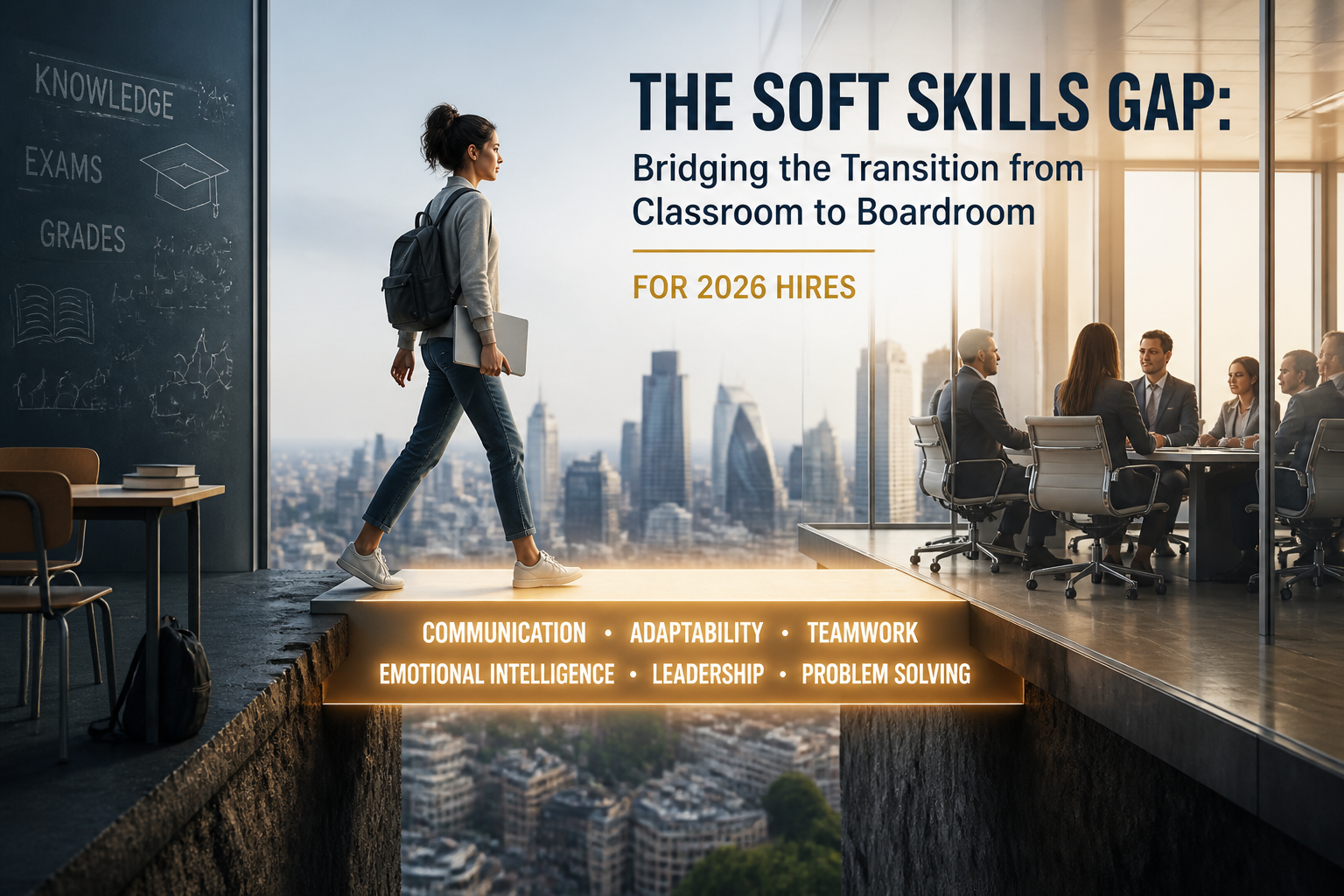
The Class of 2026 will arrive at your office doors—physical or virtual—having spent their most formative academic years navigating a global landscape defined by disruption. While this generation is perhaps the most tech-savvy and socially conscious to date, many employers are noticing a widening 'soft skills gap'. The transition from the structured, digital-first environment of post-pandemic education to the nuances of a professional boardroom is a significant leap.
For HR leaders, the challenge is no longer just about technical onboarding; it is about building 'professional literacy' and proactively supporting school leavers' mental health at work. Here is how your organisation can bridge that gap.
Redefining Professional Literacy
Professional literacy isn’t about knowing which fork to use at a business lunch; it’s about understanding the unwritten rules of the workplace. For many 2026 hires, the nuances of office etiquette—such as determining when an email should have been a phone call, how to read social cues in a meeting, or the 'soft' art of managing up—may not come naturally.
To address this, HR departments should consider incorporating 'Life at Work' modules into their induction programmes. Don’t assume that basic professional norms are common knowledge. Instead, provide clear guidance on communication cycles, the importance of punctuality in a flexible working world, and how to navigate collaborative conflict. By demystifying the 'way we do things here', you reduce the anxiety that often leads to early-career burnout.
Prioritising Mental Health as a Core Competency
The shift from a classroom to a high-pressure commercial environment is a known trigger for stress. However, the post-pandemic generation often reports higher levels of baseline anxiety regarding their career stability and performance. Supporting school leavers' mental health at work is therefore not just a moral imperative; it is a retention strategy.
Create a culture where mental health is discussed with the same transparency as KPIs. This starts with line manager training. Managers need to be equipped to spot the signs of 'quiet struggling'—which often manifests as a lack of engagement or missed deadlines—and have the confidence to start supportive conversations. Peer-to-peer support networks and 'buddy' systems are also invaluable, providing new hires with a safe space to ask 'silly' questions without the fear of being judged by their supervisors.
Intentional Mentorship and 'Reverse Mentoring'
In a boardroom setting, a school leaver can easily feel like an observer rather than a participant. Mentorship is the bridge that turns observation into integration. For 2026 hires, look beyond traditional seniority-based mentoring.
Consider 'Reverse Mentoring' schemes, where your entry-level talent shares their perspectives on technology, sustainability, or social trends with senior leadership. This empowers the new starter, giving them a sense of agency and belonging, while simultaneously helping senior staff stay connected to the mindset of a younger demographic. When a young person feels their voice is valued, their confidence grows and their 'professional literacy' accelerates.
Cultivating Resilience Through Feedback
One of the most significant gaps identified by UK employers is a sensitivity to critical feedback. Having spent years in an educational system where feedback is often structured and predictable, the fluid, sometimes blunt nature of professional critiques can be jarring.
HR should encourage a 'growth mindset' framework. Teach your new hires (and their managers) how to give and receive feedback constructively. Frame critiques as 'iterations' rather than failures. By normalizing regular, low-stakes feedback loops, you help school leavers build the emotional resilience required to thrive in a fast-paced boardroom environment.
Conclusion
Bridging the soft skills gap for the 2026 cohort requires a shift from 'hiring for fit' to 'hiring for potential and then nurturing for success'. By focusing on professional literacy and proactively supporting school leavers' mental health at work, UK employers can tap into the immense creativity and drive this generation offers. The boardroom may be a far cry from the classroom, but with the right scaffolding, your newest hires will not only bridge the gap—they will help redefine the future of your business.