
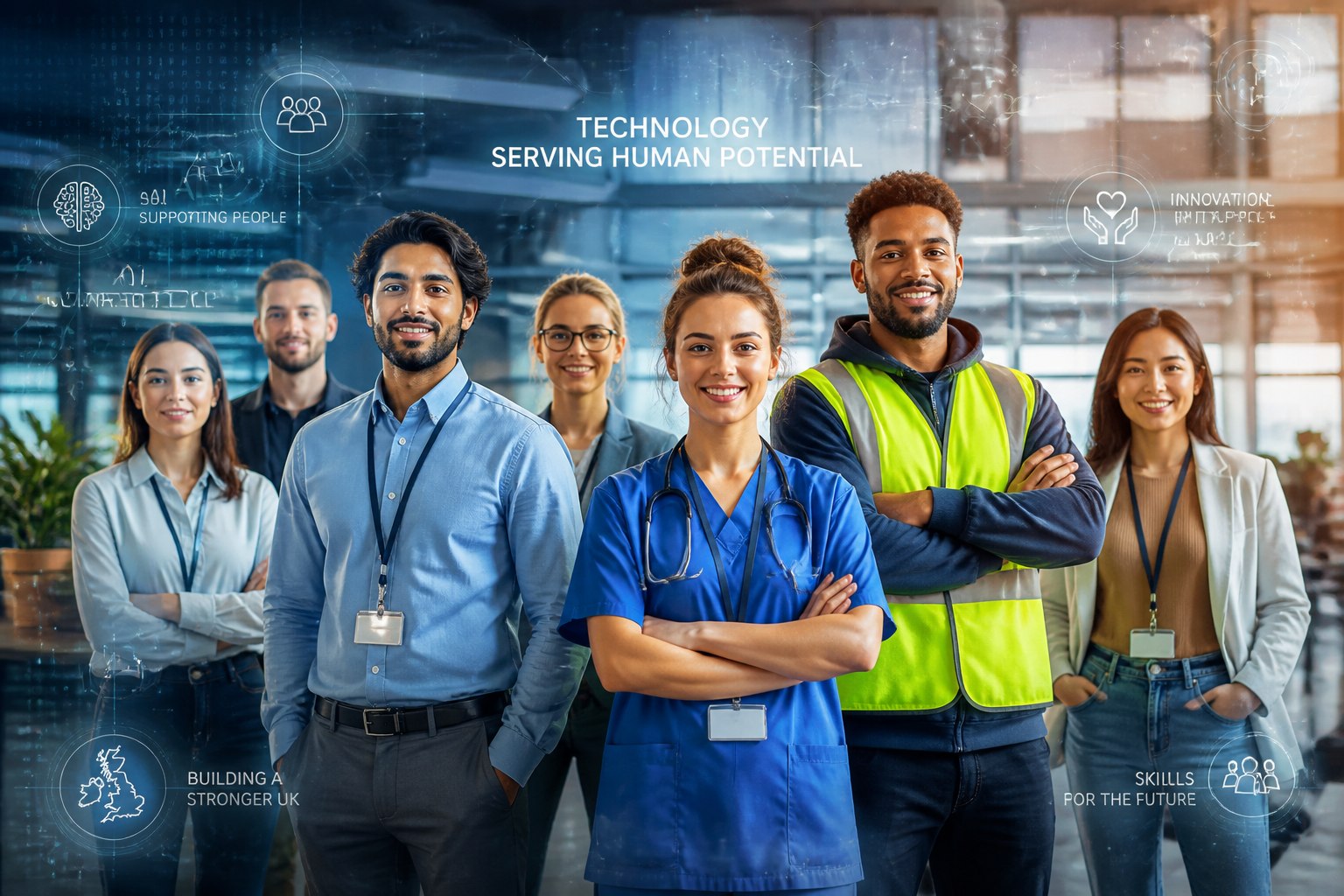
If you’ve spent any time on social media lately, you’ve likely seen the headlines predicting an AI takeover of the job market. For anyone planning to start their career in 2026, these warnings can feel daunting. However, while automation is changing how we work, it isn’t replacing the need for human talent. In fact, it is heightening the value of 'soft' skills: empathy, physical dexterity, complex problem-solving, and emotional intelligence.
The key to future-proofing your career isn't competing with machines—it’s choosing a role that machines simply cannot do. By opting for an apprenticeship in a human-centric sector, you can earn while you learn, gain a debt-free qualification, and build a career that remains resilient in the face of technological change. Here are 10 AI-proof career paths across the UK that are set to thrive in 2026 and beyond.
The Power of Physicality: Trades and Infrastructure
Algorithms are excellent at processing data, but they lack the physical grace and spatial awareness required to navigate a complex construction site or repair a historic building.
1. Electrician (Installation and Maintenance) As the UK pushes towards Net Zero, the demand for electricians to install EV chargers, heat pumps, and smart grids is skyrocketing. AI cannot rewire a Victorian terrace or troubleshoot a faulty circuit in a high-voltage environment.
2. Plumbing and Domestic Heating Technician Every home and business needs water and heat. This role requires manual dexterity and the ability to solve bespoke problems in tight spaces—tasks that robots are nowhere near mastering.
3. Civil Engineering Technician Building the infrastructure of tomorrow—bridges, railways, and flood defences—requires human oversight and physical inspection. Civil engineering apprenticeships offer a blend of office-based design and hands-on site work that provides high job security.
The Human Touch: Health and Social Care
While AI can help diagnose diseases, it cannot provide the comfort, dignity, and complex personal care that humans require. The social care and healthcare sectors are some of the most AI-resistant industries in the world.
4. Registered Nurse (Degree Apprenticeship) Nursing is the ultimate human-centric career. It requires critical thinking under pressure and, most importantly, emotional support for patients. A degree apprenticeship allows you to qualify as a nurse without the tuition fees.
5. Early Years Educator The first five years of a child’s life are critical for development. AI cannot provide the nurturing, social cues, or imaginative play required to raise the next generation. This is a role built entirely on human connection and patience.
6. Occupational Therapy Assistant Helping people regain independence after illness or injury involves high-level empathy and creative problem-solving. Every patient’s home and physical needs are unique, making this a role that resists standardisation.
Creativity and Strategy: The High-Level Thinkers
AI is a great tool for generating ideas, but it lacks the nuance of human culture and the ability to build genuine professional relationships.
7. Youth Worker Mentoring young people and navigating complex social issues requires a level of emotional intelligence and trust that a computer cannot simulate. Youth work is about building communities—a fundamentally human task.
8. Public Relations (PR) and Communications While AI can write a basic press release, it cannot manage a reputation or build personal relationships with journalists and stakeholders. PR is about nuance, tone, and strategic networking.
Public Safety and Legal Complexities
Roles that involve high-stakes decision-making and navigating the intricacies of human behaviour remain firmly in human hands.
9. Police Constable (Degree Apprenticeship) Modern policing is about community engagement, de-escalating conflict, and making ethical judgements in real-time. It is a career that requires a physical presence and a deep understanding of human psychology.
10. Paralegal Though AI can help with document review, the legal profession relies on negotiation, representation, and the application of ethics to complex human situations. Starting as a paralegal apprentice is a fantastic stable entry point into the legal world.
Why 2026 is the Year to Start
Starting an apprenticeship in 2026 puts you at the forefront of a shifting economy. While others might be worried about their roles being automated, you will be building a foundation in a sector that values your humanity. The UK government continues to invest heavily in the apprenticeship levy, meaning more high-quality vacancies are opening up in these resilient fields than ever before.
When choosing your path, look for roles that mention "bespoke," "client-facing," "complex," or "manual." These are the markers of a role that AI will struggle to replicate.
Conclusion
The future of work isn't about human versus machine; it’s about humans using their unique strengths to do what machines can't. By choosing one of these AI-proof careers, you are not just landing a job—you are securing a long-term future in an evolving landscape. Whether you’re interested in the skilled trades, healthcare, or community support, the opportunities for 16-24-year-olds in the UK have never been more vital or more protected from the rise of the robots.